.png?width=2048&height=436&name=Untitled%20design%20(2).png)
Nearly 160,000 women and girls are impacted by Nepal flash floods
Flood survivors now face severe shortages of food and water, disrupted health and protection services, and heightened risks of violence and exploitation. These risks are particularly acute for women and girls.
“The full scale of these horrific floods is still emerging”, said Patricia Fernandez-Pacheco, UN Women Representative to Nepal. “What we do know is that existing risks for women and girls skyrocket when disasters hit. More women and girls are exploited and abused. More women and girls go hungry and without medicine when resources are scarce. There is even evidence from previous disasters to suggest women are more likely to die than men.”
In all disasters, women and girls are impacted disproportionately. In addition to increased risks of violence and exploitation, women take on vastly greater unpaid care responsibilities than men, are forced to travel even further to secure water, and fall quicker and more deeply into poverty.
An estimated 157,050 women and girls living in Nepal’s Rasuwa and Nuwakot districts have been impacted directly and indirectly
626 people reported dead | 2426 missing | 101 injured
1,080+ people displaced identified across five
shelter sites; the full scale and gender profile of
displacement remain unknown
1,500 pregnant and breastfeeding women estimated to require nutrition support
9,000 adolescents | 17,000 children estimated to require nutrition support
10,000 children require immediate support for
learning continuity
Across Rasuwa, Nuwakot, Dhading Gorkha and Chitwan districts, approximately one in three women is illiterate, making it harder to access information on relief efforts, complete registration processes, and independently claim assistance
One in three households across Bagmati Province is headed by a woman, out of which one third rely on already strained remittances
On 26 August 2026, severe flooding along the Bhotekoshi and Trishuli rivers affected communities across Rasuwa, Nuwakot, Dhading, Gorkha and Chitwan districts, causing significant loss of life, displacement and damage to homes, infrastructure, agricultural land and livelihoods
Displacement and temporary shelter can increase risks to women’s and girls’ safety, privacy and dignity
Safe water, sanitation and hygiene (WASH) is both a public-health and protection priority
Flood damage may increase women’s and girls’ water-collection burden
Research in Nepal links food insecurity with women eating last and having lower dietary diversity
Following the 2015 earthquake, understaffed and overwhelmed hospitals limited access to reproductive health services, putting pregnant women and newborns at risk
Agriculture and tourism are key livelihood sectors, and damage to these sectors will have gender impacts
How is UN Women supporting women and girls in Nepal?
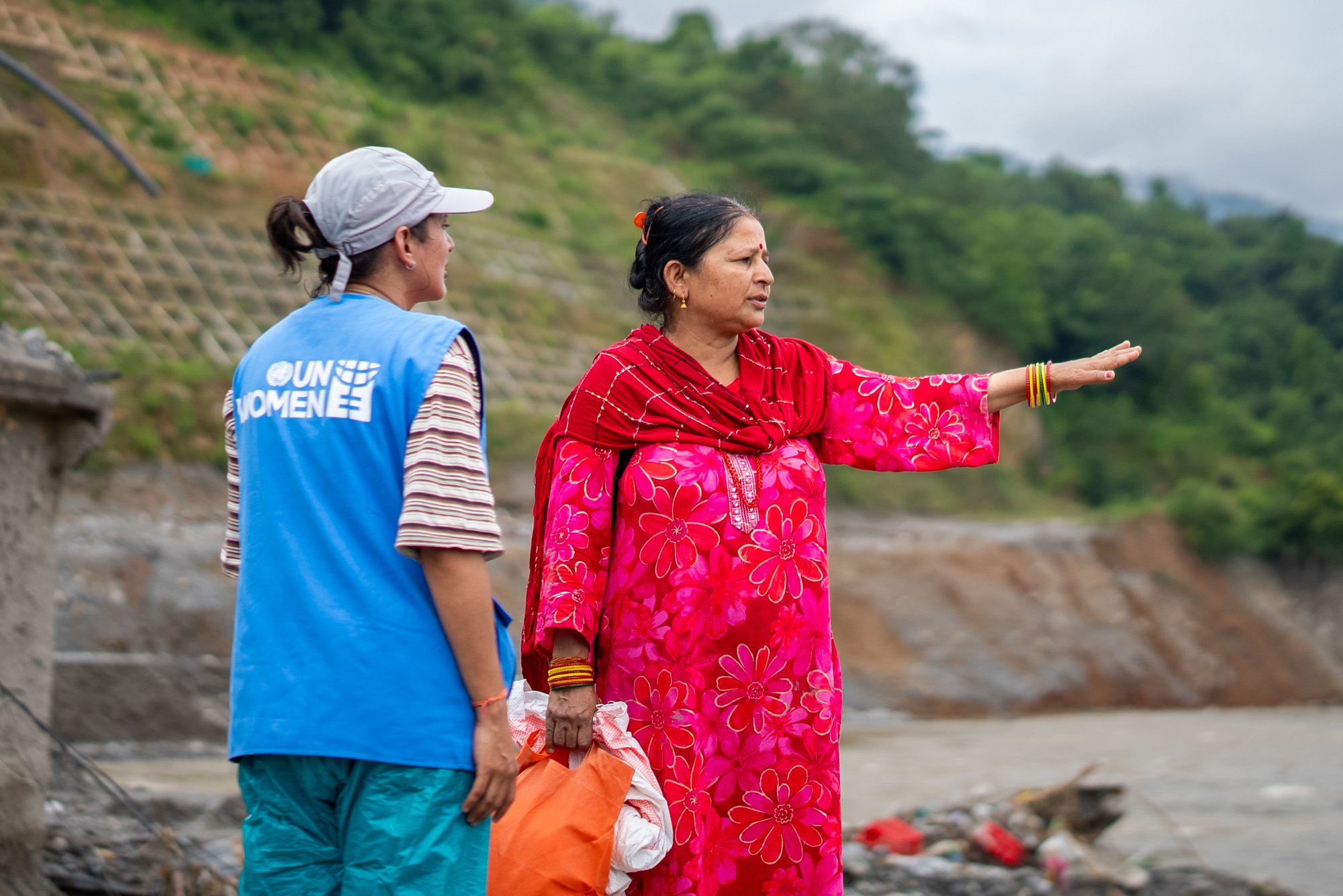
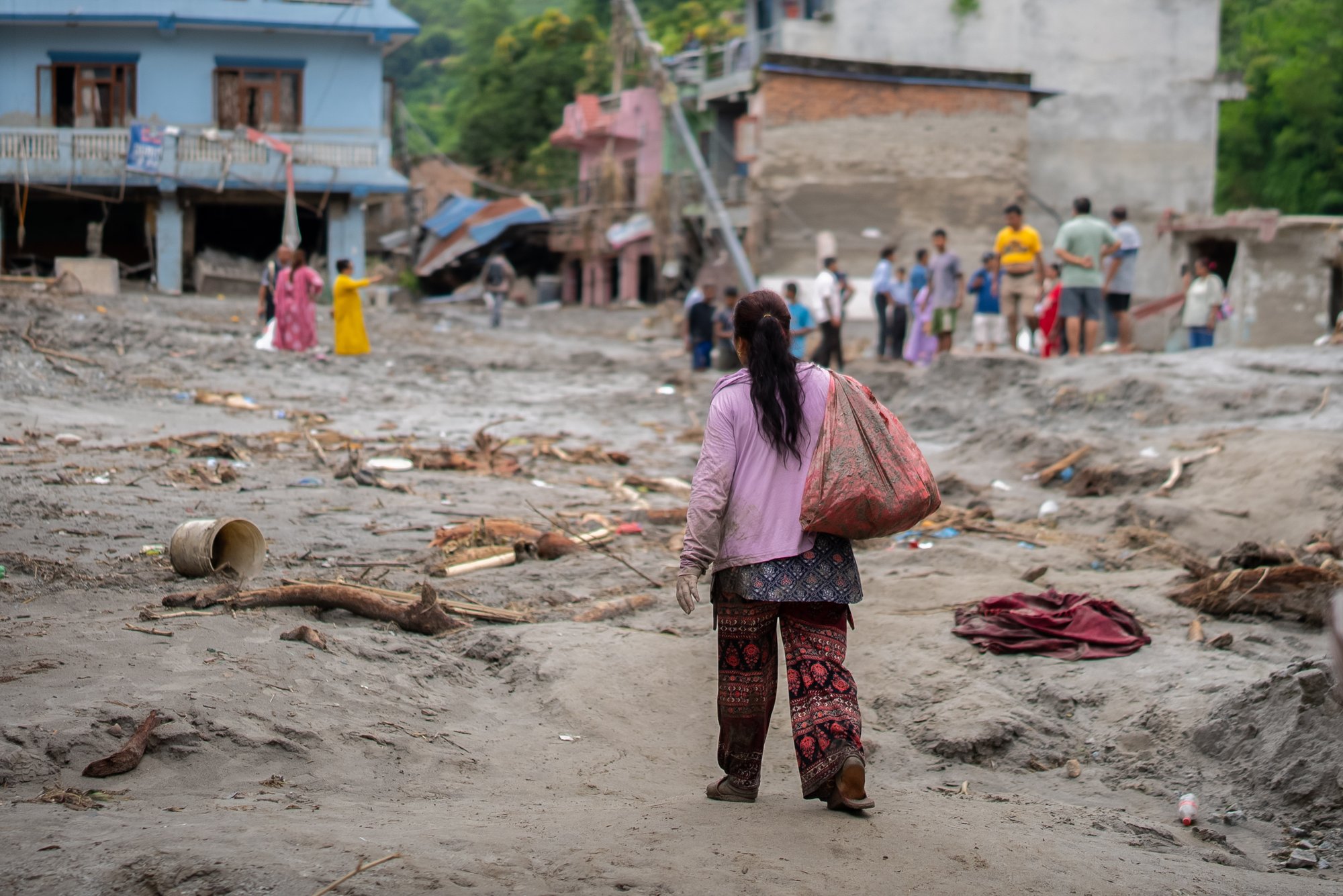
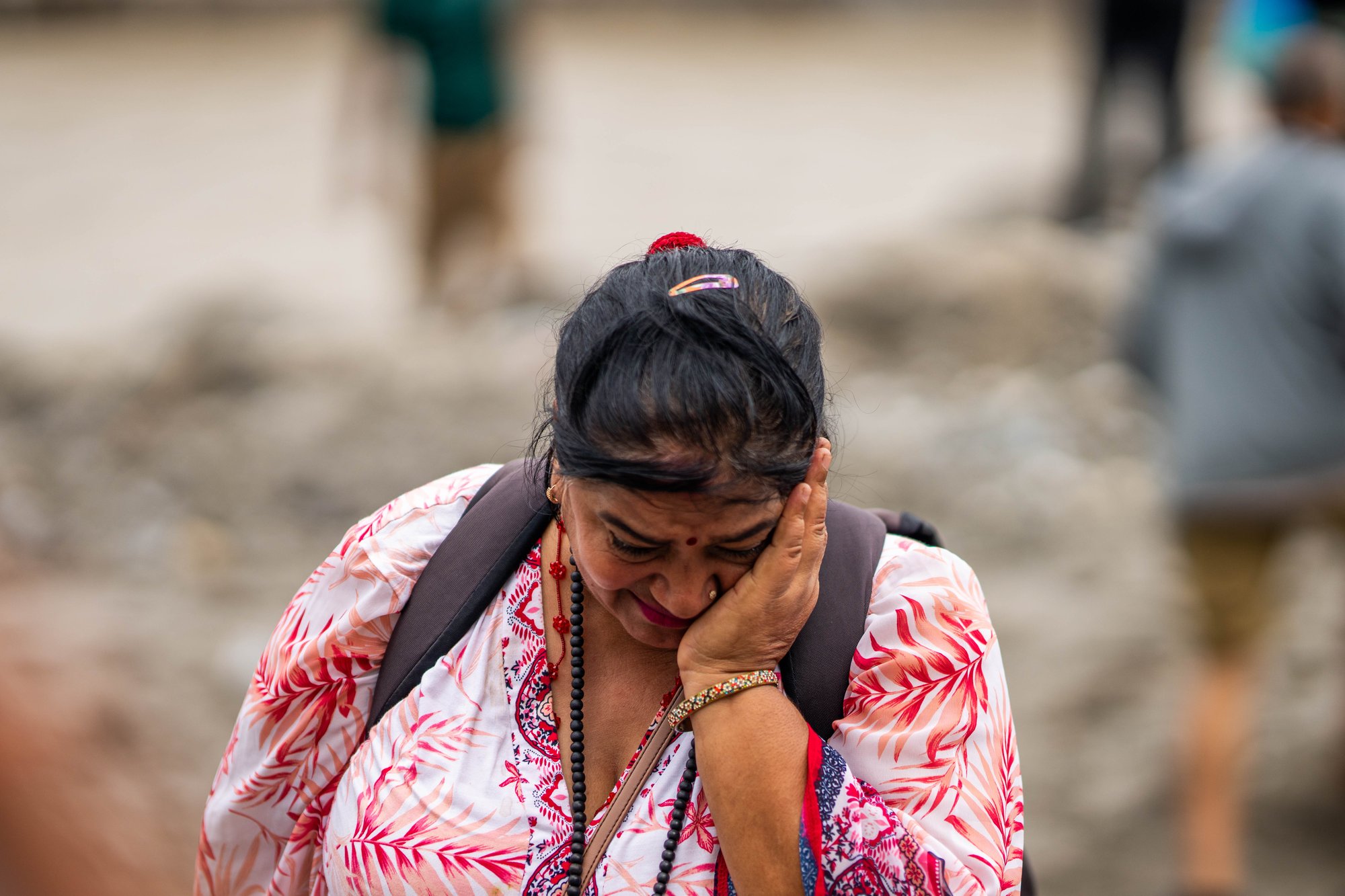
UN Women is working to ensure women and girls can access essential services and protection, and that the response addresses their needs.
UN Women is also working to ensure women can access response and recovery assistance independently and participate equally in recovery, including through direct livelihood support, reducing unpaid care responsibilities, and removing barriers related to documentation, property ownership, language, and mobility.
As part of our response, UN Women is mobilising resources for its Community Kitchen initiative, a women-led emergency response mechanism providing immediate food assistance while creating opportunities for women’s leadership, livelihoods, and longer-term recovery.
UN Women is urgently appealing for USD 2 million to ensure women and girls affected by the floods can access the assistance and protection they need, including those who are displaced, or at heightened risk of violence, trafficking, and exploitation.
The Community Kitchen is a women-led emergency response mechanism that is simultaneously a pathway to recovery:
- Local Women's Rights Organisations (WROs) and women's groups operate kitchens that deliver hot, nutritious meals to displaced and affected households
- This helps relieve women and girls of daily cooking and care burdens, so they can focus on rebuilding, caregiving for children and injured family members, and significantly accelerate early recovery efforts
- Beyond food security, community kitchens serve as a platform through which women's groups identify and refer cases of gender-based violence — advancing gender-responsive, disability-inclusive and socially inclusive responses
How to donate to Nepal
Donate to Nepal online
Use this page to make your donation online to send urgent support to women and girls in Nepal.
Donate with your company
For information on how your company can support women and girls in Nepal, please email info@unwomenuk.org